My Adidas: How Footwear Supports Movement for Individuals with Down Syndrome
It’s got to be the shoes.
For years, we’ve been told that when it comes to athletic performance, shoes matter. They can make us run faster, jump higher, and just play better.
But let’s be honest: most of this is marketing. Deep down, we all know that (unfortunately) the latest pair of running shoes won’t turn us into a world champion marathon runner.
Still, for some, shoes are more than a stylistic choice; they’re essential.
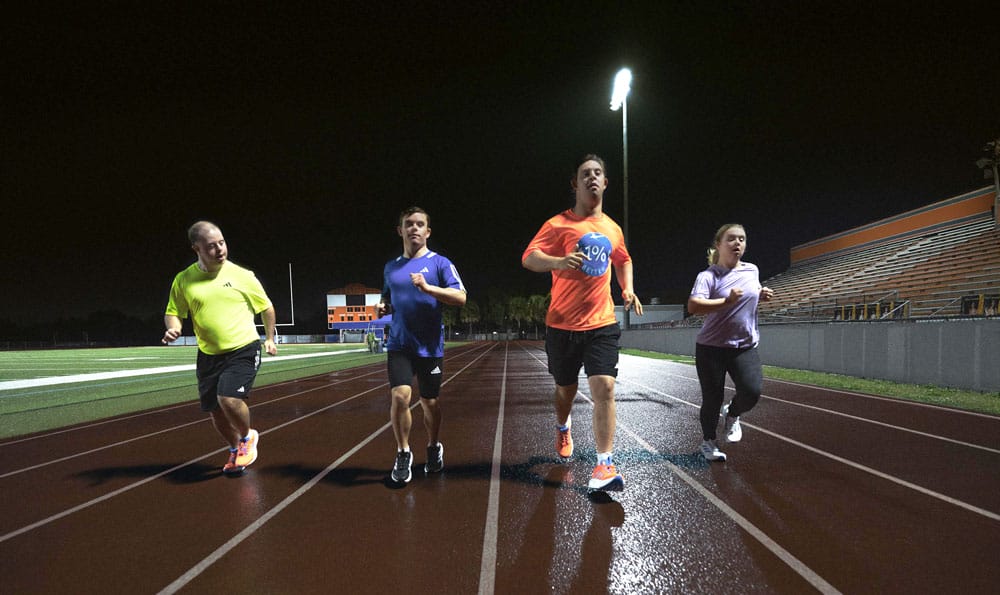
This past World Down Syndrome Day (March 21), Adidas launched a new running shoe: the Supernova Rise 3 Adaptive. This shoe is specifically designed for the disability and Down syndrome community, tailored to help individuals move, walk, and run more comfortably. It was launched in partnership with Chris Nikic, the first person with Down syndrome to complete an Ironman.
This shoe wasn’t just made for the Down syndrome community; it was made with them. But it also raises a bigger question: why do individuals with Down syndrome need specialized footwear in the first place?
At GiGi’s Playhouse, this isn’t a new conversation; it’s something we see every day. For individuals with Down syndrome, the right shoes can be transformative.
…So, why exactly is it so important? Let’s take a closer look.
Why Footwear Matters: Key Challenges for Individuals with Down syndrome
Many individuals with Down syndrome face specific physical challenges that can make running, walking, and even standing more difficult. Some of these challenges include:
Low Muscle Tone (Hypotonia) and Joint Laxity (Loose Ligaments)
People with Down syndrome tend to experience low muscle tone (hypotonia) along with increased joint laxity, meaning their ligaments are more flexible than average. That combination plays a big role in how the body stabilizes itself, especially during movement. It can make activities like walking, running, or exercising take more effort and energy.
That’s where supportive footwear comes in. Shoes with proper support can help compensate for that instability, allowing movement to feel more controlled and less tiring.
Flat Feet and Overpronation
Flat feet are very common among individuals with Down syndrome. This often leads to overpronation, where the foot rolls inward while walking or running. Because of this, standing, walking, or running can be more tiring for individuals with Down syndrome.
But flat feet and overpronation affect more than just the feet; they can also cause stress on the ankles, knees, and hips. Shoes with proper arch support and structure can help improve alignment and reduce that stress.
Balance and Coordination Challenges
For individuals with Down syndrome, balance and coordination can be a challenge. This stems in part from the physical challenges we mentioned earlier, such as low muscle tone and joint laxity, but differences in sensory systems also affect coordination and balance.
Individuals with Down syndrome have an increased likelihood of experiencing hearing and visual impairment. On top of that, people with Down syndrome tend to have decreased proprioception, which is the body’s ability to sense its own position and movements in space. Essentially, individuals with Down syndrome often have decreased body awareness.
In the end, all of these factors make movement feel less steady when individuals with Down syndrome run or move. This makes supportive footwear with grip and cushioning especially important.
Comfort and Sensory Needs
Comfort may sound like a preference, but for individuals with Down syndrome, it can often be a barrier to movement.
Shoes that are too tight, too stiff, or difficult to put on can make walking, running, or even standing uncomfortable. Sensory sensitivities are also common, so how a shoe feels against the foot can make a big difference in whether someone wants to move at all.
Footwear that fits well, feels good, and is easy to wear can make movement easier.

The Hidden Cost: Pain
All of the challenges we’ve talked about don’t just make movement harder. Over time, they can lead to something more serious: pain.
For many individuals with Down syndrome, that pain isn’t always easy to communicate. They might have trouble articulating discomfort, or they may tolerate it quietly without showing obvious signs.
But that doesn’t mean the pain is any less real. That’s why the right footwear matters so much.
Shoes won’t solve everything, but the right pair can make movement a lot more comfortable. If you or your child has Down syndrome, it’s worth looking for shoes that are lightweight, have a roomy and flexible toe area, offer a secure heel fit, and provide solid arch support.
Why It Matters
At the end of the day, this is about more than shoes.
It’s about recognizing that not everyone starts from the same place, and small adjustments can make a big difference. The right pair of shoes, whether they’re the newest pair of Adidas, another brand, or even custom orthotics, isn’t a fix-all, but it is a way to better support how someone moves through the world.
Understanding some of the common challenges individuals with Down syndrome face helps us provide the right support to ensure they can move more comfortably and confidently.
… So, is it all about the shoes? Not exactly. But they’re a good place to start.
Recent Posts