Sensory Processing Challenges
So, what happens if our sensory system is dysregulated? The purpose of our sensory system is to keep us alive. It helps us interact with the environment in a purposeful way.
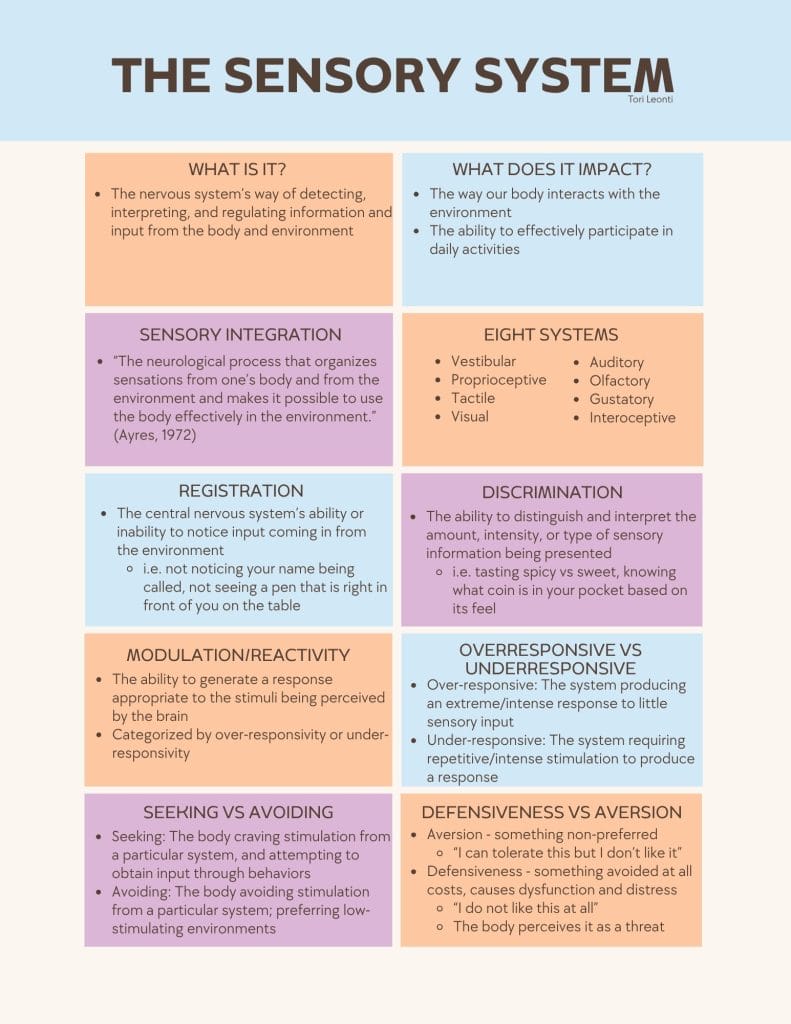
When we think about the ways our bodies modulate, react, or respond to sensory input, we can appropriately respond, or if we have sensory processing challenges, we might see an individual over-respond or under-respond.
- Over-responsivity occurs when the sensory system produces an extreme or intense reaction to very little sensory input. Individuals with over-responsivity often experience “fight or flight” reactions to normal, non-threatening daily experiences.
- Example: extreme distress from the vacuum being turned on, gagging at the presentation of certain foods, refusal to wear socks because of the seam, fearful of the playground
- Under-responsivity occurs when the sensory system requires repetitive or intense stimulation to produce a response. Individuals with under-responsivity appear to be in their own world and “zone out” frequently. They may seem disinterested by their environment and have a high pain tolerance.
- Example: appears to ignore verbal directions (didn’t register that directions were being told), appears unaware or a runny nose or food on the face, has difficulty finding items on a cluttered table
The way we respond to sensory input influences the way we behave when stimuli is present or absent. Which leads to sensory seeking and sensory avoiding behaviors.
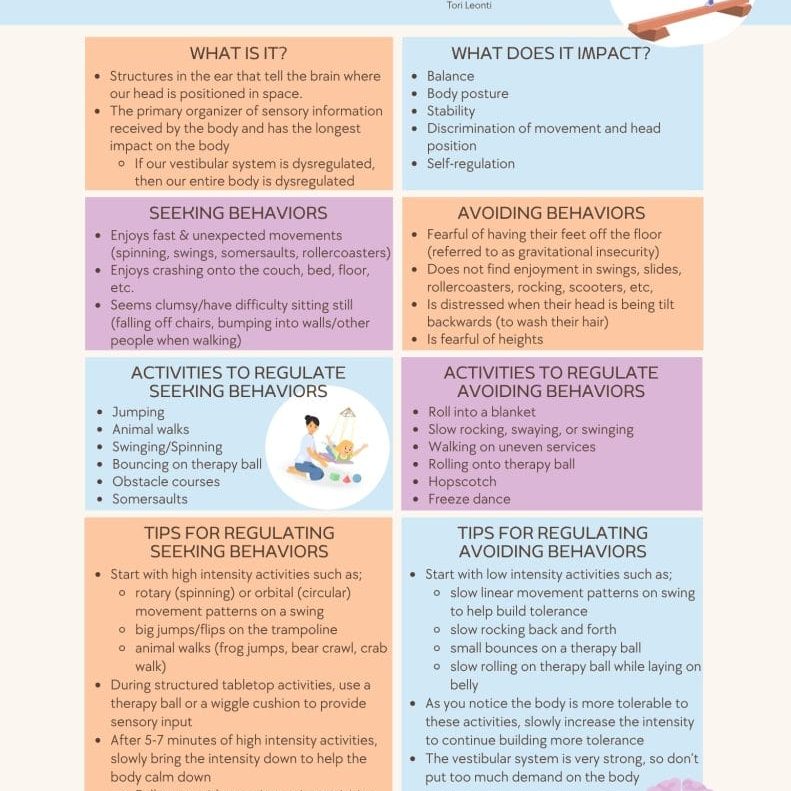
- Sensory Seeking occurs when the nervous system craves input or stimulation from a particular sensory system.
- When stimulation is absent, an individual will seek out or behave in a way that will allow them to obtain the stimulation that the brain is wanting.
- Sensory Avoiding occurs when the nervous system refrains from obtaining, or avoids, input or stimulation from a particular system.
- When stimulation is present, an individual will withdraw or stay away from whatever that stimulation may be.
Everyone’s sensory systems are drastically different from each other. We all have different tolerance levels to sensory input in order to feel regulated. We can think of this tolerance as the brain’s threshold for stimulation from a particular sensory system.
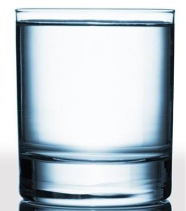
Low threshold: The nervous system is easily activated by very little input.
Picture a little cup. That small cup is going to fill up very easily with a small amount of water.
High threshold: The nervous system requires a lot of intense and repetitive stimulation to feel satisfied or regulated.
Picture a large bucket. The bucket needs a lot of water in order to be filled.

When our sensory “cups” or “buckets” become overfilled, our nervous system becomes overwhelmed or overstimulated. When our nervous system is overwhelmed, it becomes much harder to interact with our environment and with others.
Sensory avoiding behaviors are often seen with low threshold because the sensory system is attempting to refrain from obtaining input. Sensory seeking behaviors are often seen with high threshold because the sensory system is craving a large amount of input.
Everybody’s “cups” are different. Input that may be overstimulating for one child might not be stimulating enough for another child!
Recent Posts