Vestibular Sensory System
Starting off with the vestibular system, which is the most impactful sensory system in our body. We have tiny structures in our ear that tell our brain where our head is positioned in relation to gravity. Our vestibular system is extremely important for balance, postural control, stability, gross motor development, self-regulation and arousal.
Vestibular input can be alerting or calming to our nervous system, but it plays a huge role in our ability to learn, interact with others, and move!
Think about activities we participate in every single day:
- Rolling over in bed to turn off our alarm clock
- Bending over to pull our pants up or put our socks on to get dressed
- Laying on the couch to watch your favorite movie
- Riding in a car
- Bending over to pull dishes out of the dishwasher or laundry out of the washing machine
- Going up and down the steps
All of these activities require balance, movement, and our head to change positions.
Types of Vestibular Movement:
- Linear – When the body moves in a straight line, our body moves in a linear pattern. We can move forward-backward, like we’re in a rocking chair, up and down, like were jumping, or side to side, like we’re doing side lunges
- Rotary – When the body moves in a circular pattern. Thinking about the games we played growing up; Duck Duck Goose, Ring Around the Rosie, or riding a Merry Go Round.
- Orbital – When our body spins on a central axis. Thinking about tire swings, spinning cones, or sensory swings.
- Inverted – When our body moves upside down. Thinking about cartwheels, somersaults, handstands, hanging upside down on the monkey bars.
Vestibular Interventions
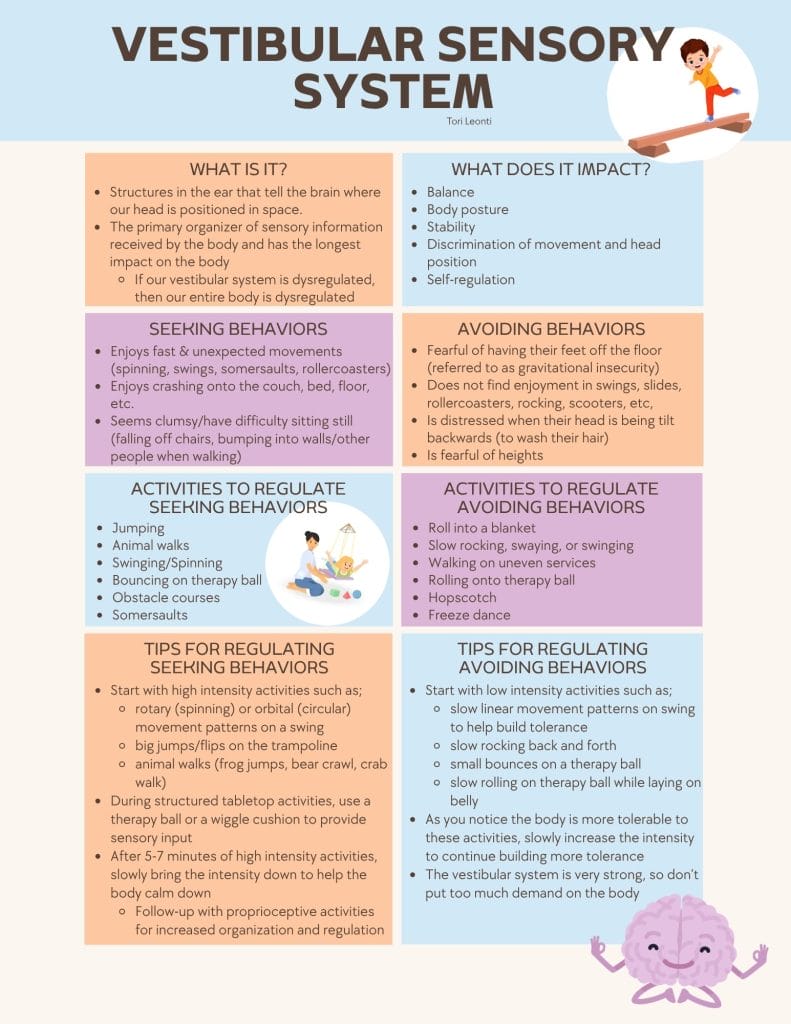
The vestibular system is always turned on and always communicating with our brain. The brain may have a low threshold for vestibular input, meaning the brain tolerates a small amount of input to feel regulated, or the brain may have a high threshold, requiring a lot of intense stimulation. Because of that, we want to be very mindful of the activities we ask children to engage in, so we don’t disrupt the regulation and organizational processes in the nervous system. Reactions to vestibular sensory input can last up to multiple hours, whether that reaction is regulation (calming) or dysregulation (overwhelmed).
When we are thinking about incorporating vestibular activities into daily life, we want to complete these activities for roughly 10-15 minutes depending on the intensity.
For individuals with a high threshold (or a sensory seeker) for vestibular stimulation, start with high intensity activities (orbital and rotary spinning, running, jumping on a trampoline) to meet the input that the brain is craving, then slowly bring the intensity of the activities down to help calm the body.
For individuals with a low threshold (or a sensory avoider) for vestibular stimulation, we want to incorporate vestibular input in a least demanding way possible. We want to start slow and try to slowly increase the tolerance to the input as time progresses. Providing too much input can cause extreme dysregulation.
Activities to Provide Vestibular Stimulation:
- Swinging
- Jumping
- Rolling
- Bouncing on therapy balls
- Obstacle courses
- Animal Walks
- Rolling on therapy ball while on stomach
- Yoga
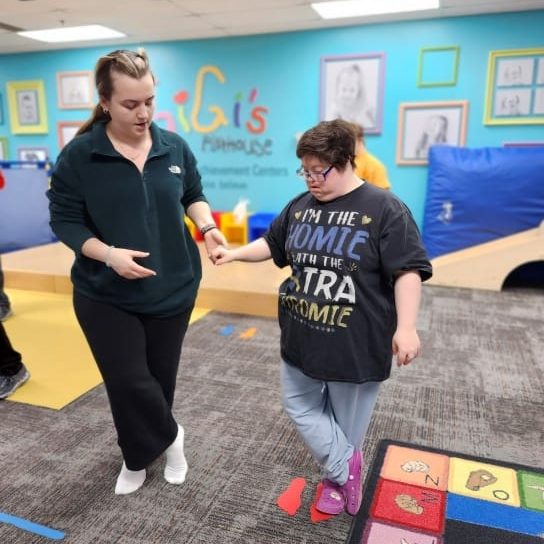
- Balance beams
- Stepping stones
- Sitting on a wiggle cushion
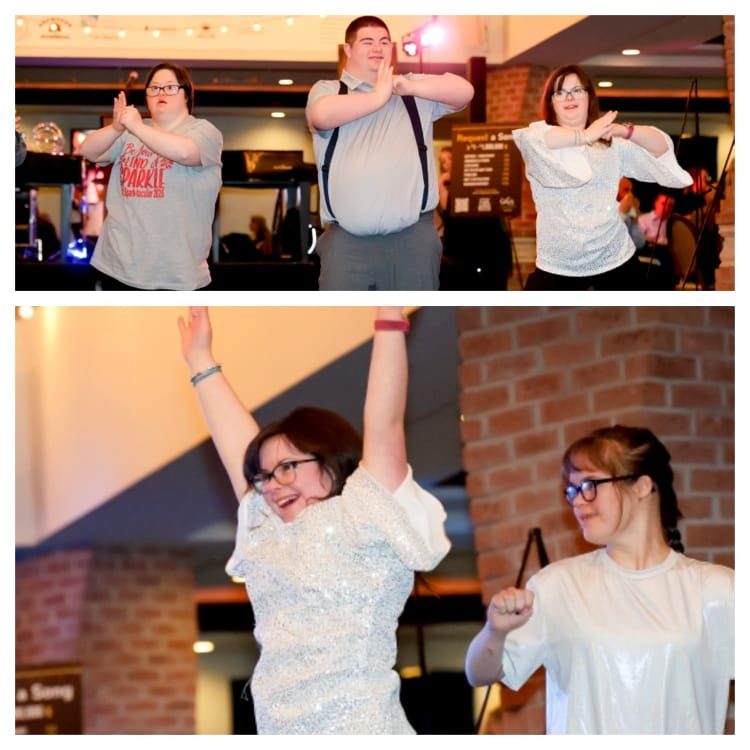
- Dancing
For a lot of activities, you might be thinking, “how can I do this at home?”. Don’t worry! There are a ton of ways activities can be adapted to be able to participate in them at home!
- Couch cushions and pillows can be used to create obstacle courses. Add blankets into the mix to create tunnels for crawling. These items can also be used to challenge balance and create unstable surfaces to walk on.
- Create a swing with blankets.
- Do you have a hill in the backyard? Roll or crawl down it! Or play tag.
- A nearby playground can be a vestibular goldmine! Monkey bars, swings, slides, ziplines, merry-go-rounds, rock walls, see-saws, and so much more.
- Have a dance party in the living room.
- Spin in an office chair.
- Do animal walks.
- Do cartwheels and somersaults.
- Jump on a trampoline.
- Crawl up/down the steps.
Vestibular input can be integrated into the simplest of activities and can help make those activities more motivating and fun!
Recent Posts